
Hass avocado from Jalisco, in all twelve months
Mexico harvests Hass avocado in all twelve months of the year. Here is the fruit from the inside: the variety, how it is graded by size and by class, and which months carry the volume.
Written from the plant that receives the fruit, measures it and packs it
Five stages that explain why an avocado arrives the way it does
The condition a Hass reaches its destination in is decided long before delivery. These five stages are what set its size, its dry matter and how much shelf life it has left.
-
Growing
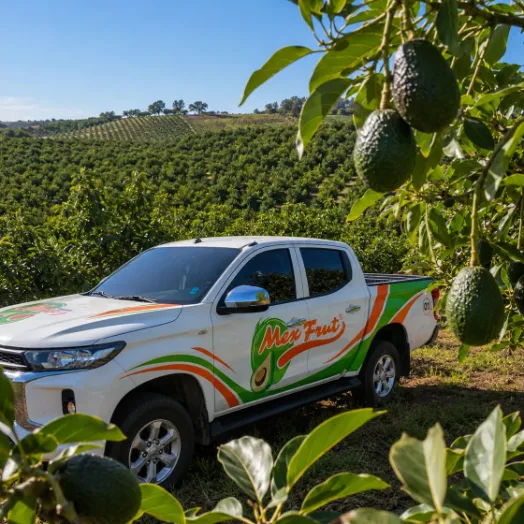
The fruit grows in orchards across Jalisco and Michoacán, both our own and those of partner growers working to the same technical criteria.
-
Harvest
Picking is decided by physiological maturity rather than by the calendar: a Hass cut too early never ripens properly.
-
Packing
At the plant the fruit is separated by size and by class, the dry matter of the lot is measured, and each size goes into the box that fits it.
-
Export
Fruit leaving the country travels with phytosanitary certification and an open traceability record, lot by lot.
-
Distribution
The cold never breaks: controlled temperature is what keeps the fruit firm and holds ripening back along the way.
What a Hass avocado is.
Hass is the name of one specific variety of Persea americana. It is not a quality grade and it is not a brand. What separates it from the rest can be seen by eye and confirmed in the plant laboratory.
-
Pebbled skin that changes colour
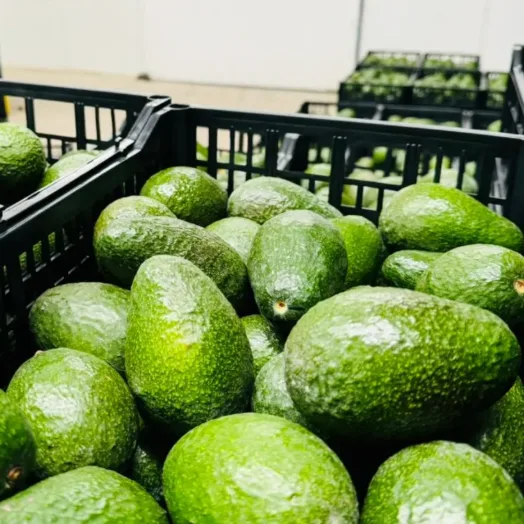
Hass skin is thick and coarse-grained, and it darkens from green to almost black as the fruit ripens. That same skin is what shields the flesh while the fruit travels.
-
Dry matter above 23%
Dry matter measures the oil content of the flesh, and it is checked lot by lot before packing. Below a certain threshold the fruit will not ripen the way it should, however good it looks.
-
Flesh that holds together
It is a creamy-fleshed variety with a small stone relative to the size of the fruit, and it stands up to cutting and to transport better than the smooth-skinned varieties.
-
Category I and II
Fruit is graded into two quality categories according to the surface defects it shows. Neither of them reaches the flesh: the difference is on the outside.
From Jalisco, and from every month of the year.
The fruit from this facility comes from orchards in Jalisco and Michoacán. Mexico is the only origin that sustains Hass production across all twelve months, and the calendar shows it: there are months of heavy volume, months of moderate volume, and two months when fruit is worked to prior scheduling.
| Jan | Feb | Mar | Apr | May | Jun | Jul | Aug | Sep | Oct | Nov | Dec |
|---|---|---|---|---|---|---|---|---|---|---|---|
| High | High | High | Moderate | Moderate | Scheduled | Scheduled | Moderate | High | High | High | High |
- High availability
- Moderate availability
- Subject to prior scheduling
These are reference windows for the origin, not a commitment of stock: the real volume of any given month depends on the picking and on the season under way.
Sizes and classes: two scales that measure different things.
An avocado is described by two figures that are easy to confuse. One tells you how much the fruit weighs; the other, what condition its skin is in. They are independent: there is large Class B fruit and small Class A fruit.
Size, largest to smallest
Size is called the calibre, and on the Mexican commercial scale it is named rather than numbered. The six names run from the largest piece to the smallest:
- Súper largest
- Extra
- Primera first
- Segunda second
- Tercera third
- Cuarta fourth
For export the same idea is expressed as a number, which is how many pieces fit in the box: more pieces means smaller fruit. In the 11.3 kg carton the scale runs from 32 to 84.
Class, which is about the skin
Class separates fruit by the state of its surface, not by its size. Class A carries no visible marks; Class B allows field marks — rubbing, a healed scar, the odd blemish — that do not reach the flesh and do not change the taste. Both classes exist in every size.
The box decides the size
The same calibre number does not mean the same thing in two different boxes, because what counts is how many pieces fit in that particular container. That is why the range moves with the presentation:
| Presentation | Calibre range |
|---|---|
| 11.3 kg carton | 32 to 84 |
| 6 kg carton | 18 to 35 |
| 4 kg carton | 12 to 30 |
| 10 kg plastic | 12 to 30 |
| 20 kg plastic | On request |
Boxes travel on a 1200 × 1000 mm pallet, and the 40-foot refrigerated container takes twenty pallets.
Minimum volume and payment.
Two figures govern any wholesale order and they are the same for every destination: the volume we work from, and when payment falls due.
- Volume
- From 1 metric ton collected in bulk at the Zapotiltic plant. For a full container load, 20 metric tons.
- Payment
- Cash, in two halves: one on confirmation and one before the load leaves the plant.
The rest — destination, presentation, sizes and frequency — is settled with you when we quote.
Ask for pricingThe plant where fruit stops being a harvest and becomes a product.
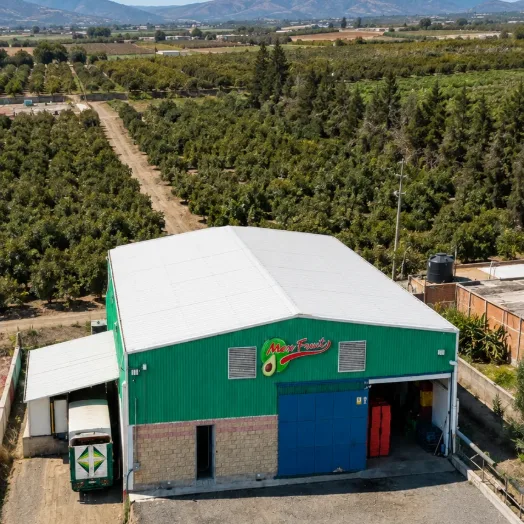
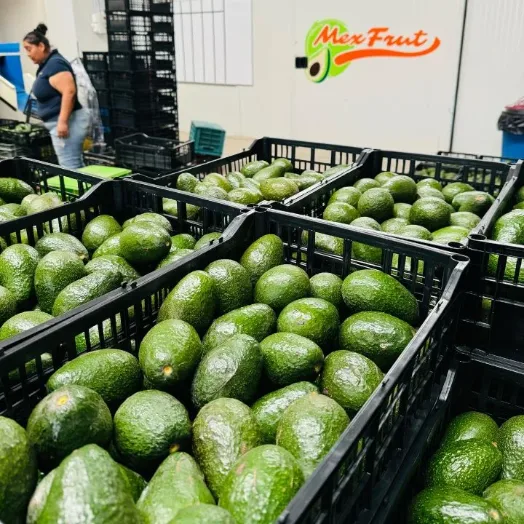
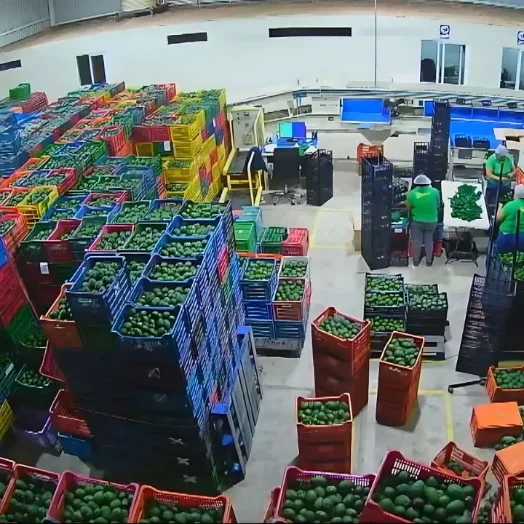
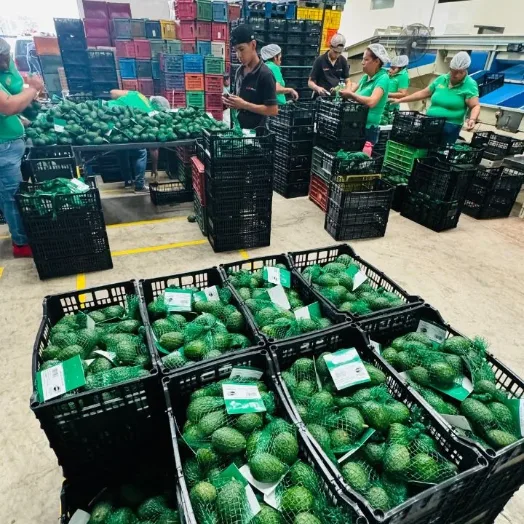
All of it happens in one building in Zapotiltic, Jalisco. Fruit comes in through receiving, goes through sorting and sizing, has the dry matter of its lot measured, is packed, drops into cold storage, is palletised and is loaded. The record of every lot stays open from the orchard it came from until the vehicle pulls out of the plant.
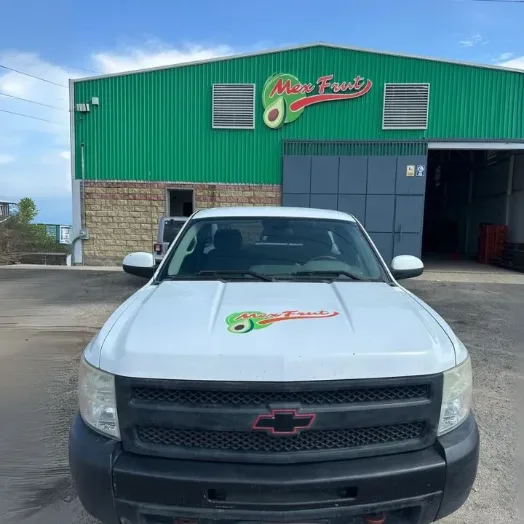
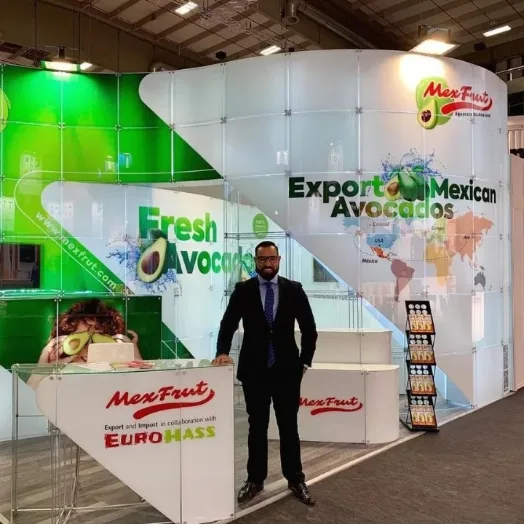
Footage of the internal process: the grading belt, the cold room and the loading bay. The narration is in Spanish and there is no caption track.
Plant gallery
Eight markets, one origin.
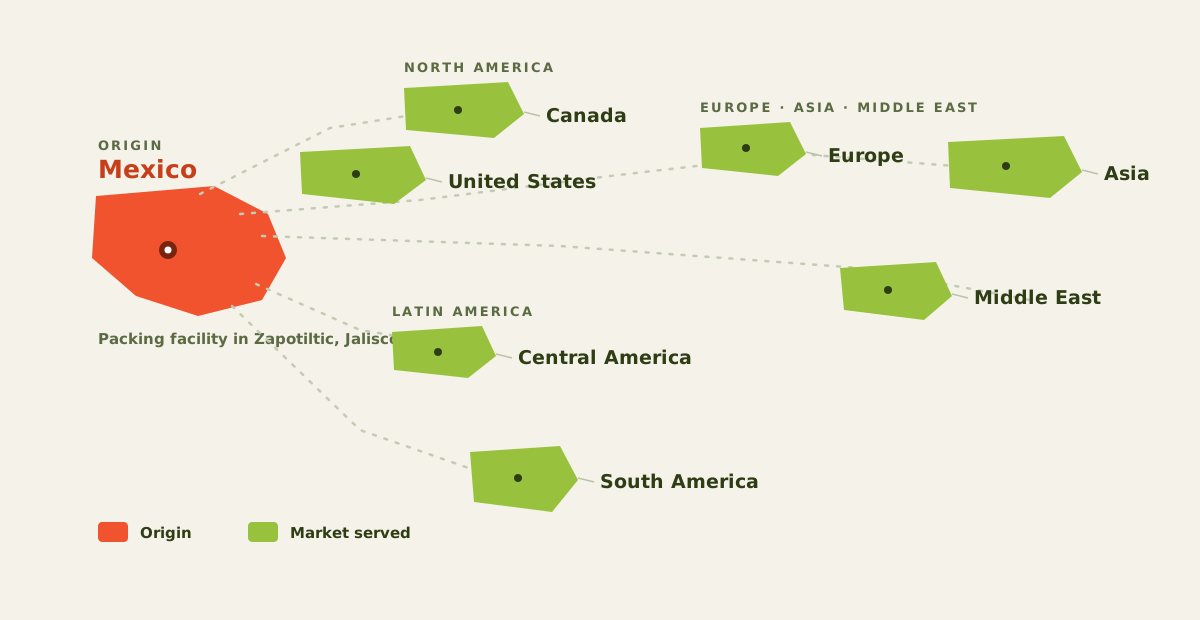
Fruit leaving Zapotiltic is eaten in eight markets. Each one has its own documentary requirements and its own way of ordering the product, and that gets settled case by case when the load is scheduled.
- Mexico
- United States
- Canada
- Central America
- South America
- EuropeSpain among its destinations
- Asia
- Middle East
Route, port and transit time are set when each load is scheduled, with that season and that shipping line in front of us. Tell us the destination and we will give you all three.
Certifications.
Food safety and good agricultural practice certifications awarded by external audit, plus our sanitary registration and our industry memberships.

SENASICA 
Primus GFS 
Global G.A.P. 
USDA 
SAGARPA 
ICEA 
CPMA 
IFPA
Write to the packing facility.
Whether you need one specific figure or pricing and availability for a bulk order, the same person answers: the one who knows what is in the cold room this week.
- Packing facility
- Libramiento carretera Zapotiltic – Tamazula Km 1.672, Lote 1. Zapotiltic, Jalisco, Mexico.
- contacto@mexfrut.com
- Phone / WhatsApp
- +52 33 3157 3159
Your message arrived.
Someone from the packing facility team reads it and answers with whatever you asked for. If you would rather sort it out right now, WhatsApp is open Monday to Saturday.
Message us on WhatsAppOur direct address is contacto@mexfrut.com
Frequently asked questions.
What exactly is a Hass avocado, and where did it come from?
It is one specific variety of Persea americana, the avocado species, and not a quality grade or a brand. You recognise it by the thick, pebbled skin that darkens as the fruit ripens, by the creamy flesh, and by a high oil content, which the plant confirms by measuring the dry matter of every lot. Its origin is documented with unusual precision: it grew from a seed that Rudolph Hass, a postal worker and amateur horticulturist, planted in 1926 in La Habra Heights, California, and patented in 1935. Every Hass tree bearing commercial fruit anywhere in the world descends by grafting from that single specimen, so the variety is genetically the same whatever its origin. A genetic study published in 2019 also established that the original tree was a cross between the Mexican and Guatemalan races, with the Mexican race as the majority component.
How is it different from other avocado varieties?
In three practical ways: the coarse, thick skin protects the flesh in transit far better than the thin smooth-skinned varieties; the stone is small relative to the size of the fruit, so more of each piece is usable; and ripening is predictable, which makes it possible to deliver the fruit green and firm and let it finish ripening at destination. That is why it is the variety most of the fresh produce trade works with.
How is a Hass avocado graded before packing?
By two independent criteria. Size is called the calibre, and on the Mexican commercial scale it runs from largest to smallest as Súper, Extra, Primera, Segunda, Tercera and Cuarta; for export the same size is expressed as pieces per box, where the number goes up as the fruit gets smaller. The second criterion is the class, which looks at the state of the skin: Class A carries no visible marks and Class B allows field marks that do not reach the flesh.
When is Hass avocado in season in Mexico?
There is no single season, and that is what makes the Mexican origin unusual: there is fruit in all twelve months. What changes is the volume. From September to March availability is high; April, May and August are moderate; June and July are worked to prior scheduling. These are reference windows for the origin — the actual volume of any month is set by that season's picking.
How is it stored and how does it ripen?
It is kept in cold storage and it ripens outside it. Fruit leaves the plant green and firm, with the cold chain running from the cold room to the destination, and it is on coming out of the cold that it starts to soften and darken. Breaking the cold chain halfway through brings that forward and shortens the shelf life left at the point of sale. That is why the ripening stage is agreed before loading, according to what each operation needs.
Why Mexican Hass rather than another origin?
Continuity. Other origins have shorter harvest windows, whereas Mexico produces in all twelve months and lets you schedule without depending on a single window. On top of that comes what depends on the individual plant rather than on the country: in this case, our own and partner orchards in Jalisco and Michoacán, dry matter measured lot by lot, and eight certifications in force covering food safety and good practice.
